
Real Estate Lawyer in Turkey for Foreign Investors
Buying property in Turkey requires more than signing a sales agreement and completing a title deed transfer. Foreign investors may encounter mortgages, attachments, zoning restrictions, construction defects, developer defaults, payment compliance requirements and limitations on foreign ownership.
Pi Legal Consultancy advises domestic and international investors, property owners and companies throughout real estate transactions in Turkey. Our real estate lawyers conduct legal due diligence, review and negotiate contracts, coordinate title deed transfers and represent clients in property-related disputes. We provide legal support from the initial property review to the completion of the transaction and, where relevant, related residence or citizenship procedures.
Real Estate Law in Turkey
Real estate transactions in Turkey are governed by interconnected legal, administrative and financial rules concerning land registry records, contracts, zoning, construction, taxation and property ownership. Foreign buyers may also be required to comply with restrictions on foreign ownership, payment and foreign exchange requirements, property valuation procedures and, where relevant, residence or citizenship regulations.
A property transaction that appears straightforward at the sales-agreement stage may still involve legal risks arising from mortgages, attachments, title deed annotations, zoning restrictions, missing construction or occupancy permits, contractual deficiencies or the legal and financial status of the seller or developer. These risks should be identified before a deposit is paid or a binding agreement is signed.
For this reason, legal review should begin at the earliest stage of the proposed transaction. A real estate lawyer in Turkey can examine land registry records, review zoning and licensing documents, assess contractual and payment obligations, negotiate protective terms and coordinate the title deed transfer. Early legal due diligence can reduce financial exposure, prevent procedural delays and provide stronger protection throughout the property transaction.
Turkey Real Estate Market and Investment Context
Türkiye’s strategic position between Europe, Asia and the Middle East, its large domestic market and its established construction and commercial property sectors make real estate relevant to both domestic and international investors. However, market potential should always be considered together with the legal, financial and property-specific risks affecting the proposed transaction.
Why Does Turkey Attract Real Estate Investment?
According to the OECD Economic Surveys: Türkiye 2025, Türkiye has been one of the fastest-growing economies in the OECD over the past decade. The country’s strategic location, commercial infrastructure and access to regional markets continue to support domestic and international investment activity. At the same time, investors should take account of inflation, financing conditions, regulatory requirements and the specific legal status of the property or project under consideration.
A real estate investment should therefore be assessed on the basis of the investor’s intended use, the type and location of the property, the legal status of the seller or developer, applicable zoning and construction rules, title deed records, payment requirements and the expected holding structure.
What Do the Latest Real Estate Market Figures Show?
The Presidency of the Republic of Türkiye Investment and Finance Office reports that total foreign direct investment reached USD 11.3 billion in 2024, of which USD 2.8 billion was directed to real estate. Real estate investment therefore represented approximately 25% of Türkiye’s total foreign direct investment inflows during the year.
Source: Presidency of the Republic of Türkiye Investment and Finance Office, 2024 Year-End Real Estate Market Overview.
The same official data show that 23,781 residential properties were sold to foreign buyers in Türkiye in 2024. These figures demonstrate continuing international interest in the Turkish property market, although market demand alone does not establish whether a particular property is legally secure, commercially suitable or appropriate for an individual investor.
Where Is Foreign Buyer Demand Concentrated?
In 2024, Istanbul accounted for 38% of residential property sales to foreign buyers, followed by Antalya with 37% and Mersin with 9%. Ankara and Yalova each represented 3% of foreign residential sales.
These figures show where foreign demand was concentrated during the year; they should not be treated as a list of the “best” or “safest” places to invest. The suitability of a location depends on the intended use of the property, title and zoning status, development conditions, local restrictions, expected costs and the investor’s commercial or personal objectives.
Who We Assist in Real Estate Matters in Turkey
Pi Legal Consultancy assists foreign individuals, private and institutional investors, companies, developers, landlords, tenants and property owners in residential and commercial real estate matters in Turkey. Our advice is tailored to the client’s role in the transaction, the intended use of the property, the proposed transaction structure and the legal risks identified during the matter.
Property Purchase Process in Turkey
The precise process for purchasing property in Turkey depends on the type and legal status of the property, the identity and nationality of the buyer, the seller or developer, the payment structure and the buyer’s intended use. A typical transaction involves the following stages.
1. Define the Transaction and Buyer Structure
The first stage is to determine who will acquire the property, whether the buyer will act personally or through a company or representative and how the property will be used. Any restrictions applicable to a foreign purchaser and any residence, citizenship, commercial or investment objectives should be identified at this stage.
2. Collect the Property and Seller Documents
The buyer should obtain the available title deed information, property and parcel details, seller identification or corporate documents, permits, project specifications, payment schedule and proposed agreements. The documents required will vary depending on whether the transaction concerns a completed property, an off-plan development, land or commercial real estate.
3. Conduct Legal Due Diligence
Before making a substantial payment or signing a binding agreement, the property and seller should be reviewed. The review may include ownership, mortgages, attachments, title deed annotations, zoning status, construction and occupancy records, the seller’s authority and the legal terms of the proposed transaction.
Any issue identified during due diligence should be evaluated before the parties proceed to the contractual and payment stages.
Before completing a property acquisition, buyers should carefully review the legal status of the property, title deed records and potential encumbrances. For a detailed overview, see our guide on legal due diligence before buying property in Turkey.
4. Negotiate and Sign thLand Registry recordse Agreement
The reservation form, preliminary sales agreement or purchase agreement should accurately identify the property, price, payment schedule, completion or delivery conditions and the parties’ respective obligations.
The agreement should also address termination, repayment, delay, contractual penalties, defects, failure to transfer title and the consequences of non-performance. Protective terms should be negotiated before the buyer pays a deposit or becomes bound by the transaction.
5. Prepare the Transfer Documents and Payment Arrangements
The parties should prepare the documents required for the Land Registry application. Depending on the buyer, property and transaction, these may include identification documents, certified translations, a Turkish tax number, valuation documentation, compulsory insurance records, banking or foreign exchange documents and a power of attorney.
The parties should also confirm the allocation of taxes, Land Registry fees and transaction costs and agree on the timing and method of payment.
6. Complete the Land Registry and Title Deed Transfer
The seller and buyer, or their properly authorized representatives, complete the required procedure before the relevant Land Registry Directorate. Before completion, the final title deed records, transaction documents and payment conditions should be checked again.
Ownership is transferred through registration at the Land Registry Directorate. A reservation form, private purchase agreement or preliminary sales agreement should not by itself be treated as evidence that ownership has passed to the buyer.
7. Complete the Post-Purchase Procedures
Following registration, the buyer should obtain and retain the relevant transaction and title deed records and complete the agreed handover of the property. Depending on the transaction, post-completion work may include utility subscriptions, insurance, tax and municipal records, property management arrangements and the review of ongoing building or site obligations.
If the property is connected with a residence or citizenship application, the relevant immigration or citizenship procedure should be followed separately and the supporting records should be preserved.
Related guide: Read more about the role of a conveyancing lawyer in Turkey throughout the property transfer process.
Legal Due Diligence for Property in Turkey
Legal due diligence is the examination of the property, the seller and the proposed transaction before the buyer becomes legally or financially committed. It should normally be completed before a substantial deposit is paid or a binding purchase agreement is signed.
The purpose of the review is not to guarantee that a transaction is entirely free from risk. Its purpose is to identify material legal issues, explain their potential effect and enable the buyer to decide whether to proceed, request further protection, renegotiate the transaction or withdraw.
What Does Real Estate Due Diligence Cover?
The appropriate scope depends on the property type, the seller, the stage of development and the buyer’s intended use. A legal due diligence review may include the following areas.
Ownership and Title
The review should confirm the registered owner, the nature and extent of the ownership interest, the property description and whether the seller has the legal authority to complete the proposed transaction. The title deed information should be compared with the property and transaction presented to the buyer.
Encumbrances and Third-Party Rights
The Land Registry records should be examined for mortgages, attachments, liens, usufruct rights, easements, purchase promises, restrictions, declarations and other annotations that may affect ownership, use or transfer.
The existence of an annotation does not always mean that the transaction cannot proceed. Its legal effect and the steps required for its release or management should be assessed before completion.
Zoning and Permitted Use
The review may include the applicable zoning status, designated use, development conditions and available municipal records. This is particularly important when the buyer intends to develop land, alter the property or use it for a particular residential or commercial purpose.
Construction and Occupancy Records
For completed or developing buildings, the available construction permits, approved project records, occupancy documentation and condominium or construction servitude status should be considered. The records should be assessed in light of the property being offered to the buyer.
Seller or Developer Review
Where the seller is a company or project developer, the review may include its corporate status, authorized representatives, available trade registry information and authority to enter into the transaction. Depending on the transaction, relevant litigation, enforcement, insolvency or project-related risks may also require investigation.
Contract and Transaction Review
Due diligence should also cover the reservation form, preliminary agreement, purchase agreement, payment schedule and related documents. The review should address the property description, price, delivery obligations, title deed transfer, termination, repayment, delay, defects, contractual penalties and the consequences of non-performance.
For a foreign purchaser, the scope may also include nationality-based ownership restrictions and applicable valuation, payment, foreign exchange, residence or citizenship requirements.
How Are the Findings Used?
The findings should be communicated to the buyer before completion and, where appropriate, reflected in the transaction documents. Depending on the issues identified, the buyer may decide to:
- proceed without a material change;
- proceed subject to the release of an encumbrance or satisfaction of a condition;
- renegotiate the price, payment structure, timetable or contractual protections; or
- withdraw from the proposed transaction.
Where a risk can be resolved, the required action and responsible party should be clearly identified. Where it cannot be resolved before completion, the buyer should be informed of the continuing legal and financial consequences.
What Does Legal Due Diligence Not Cover?
Legal due diligence should be distinguished from a structural survey, engineering inspection, independent property valuation, financial audit and specialist tax or environmental assessment.
A lawyer may review the legal documents connected with these matters, but the physical condition of the property, structural safety, market value and specialist technical compliance may require separate architects, engineers, valuation experts, accountants or other qualified professionals.
The scope of each review should therefore be agreed acEncumbrances and Third-Party Rightscording to the particular property and the buyer’s objectives.
Considering a property transaction in Turkey? Request a legal due diligence review before signing an agreement or transferring funds.
Property Purchase and Conveyancing Services in Turkey
In the context of a real estate transaction, conveyancing refers to the legal and procedural work required to move a property purchase from the contractual stage to registration of ownership. It includes coordinating the agreement, payment conditions, required documents, representation and Land Registry procedure.
Pi Legal Consultancy assists domestic and international clients with residential and commercial property acquisitions in Turkey. The scope of the engagement is determined according to the property, the parties, the transaction structure and whether the client will complete the procedure personally or through an authorized representative.
Contract Review and Negotiation
The purchase agreement should accurately identify the property, parties, purchase price, payment schedule and conditions for completion. Depending on the transaction, it may also need to address delivery, defects, delay, title deed transfer, existing encumbrances, termination, repayment, contractual penalties and the consequences of non-performance.
Pi Legal Consultancy can review a proposed reservation form, preliminary agreement or purchase agreement and recommend revisions to protect the client’s position. Where required, we can prepare or negotiate transaction documents and coordinate their execution with the buyer, seller, developer and other relevant parties.
The contract review should be completed before the client signs the document or pays a substantial deposit.
Payment and Completion Planning
The payment schedule should be aligned with the contractual and Land Registry stages of the transaction. Before payment, the parties should determine what amount is payable, when it becomes due, which conditions must first be satisfied and what documentary evidence should be retained.
Our work may include reviewing the proposed payment structure, identifying contractual payment risks and coordinating the timing of payment with the agreed completion steps. Where applicable, the documentation connected with banking, valuation, foreign exchange or citizenship requirements should also be considered.
Pi Legal Consultancy does not provide banking or investment services. Any transfer of funds remains subject to the client’s instructions, the relevant bank’s procedures and the applicable legal and regulatory requirements.
Power of Attorney and Remote Transactions
A client who cannot attend the transaction in Turkey may be able to authorize a representative through a properly drafted power of attorney. The required authority should be defined according to the specific transaction and may include signing agreements, filing applications, obtaining documents, attending the Land Registry procedure and completing post-registration formalities.
We can prepare or review the proposed scope of authority and advise on the execution and use of a power of attorney issued in Turkey or abroad. Powers of attorney issued outside Turkey may require an apostille or consular certification and a notarized Turkish translation, depending on the country of issue and applicable procedure.
The power of attorney should provide only the authority required for the intended transaction. Its scope, duration and any authority concerning payment, title deed transfer or citizenship-related declarations should be reviewed carefully before execution.
Land Registry and Title Deed Transfer
Ownership of property in Turkey is transferred through registration before the relevant Land Registry Directorate. A private agreement or payment of the purchase price does not by itself complete the transfer of ownership.
Pi Legal Consultancy can assist with the preparation and review of the documents required for the application, communication with the parties and relevant professionals, appointment and procedural coordination and representation where a valid power of attorney has been issued.
Before completion, the final Land Registry records, identity and authority of the parties, transfer terms and agreed payment conditions should be checked. Any mortgage, attachment, annotation or other issue that must be released or addressed before transfer should be handled in accordance with the agreed completion arrangement.
The precise document requirements depend on the property, the parties and the purpose of the transaction. Foreign purchasers may need additional identification, translation, valuation, banking, foreign exchange or representation documents.
Post-Completion Coordination
Following registration, the client should retain the relevant title deed and transaction records and complete the agreed handover of the property. Depending on the engagement, we may also assist with utility, insurance, municipal, tax, property management or contractual matters arising after completion.
Where the acquisition is connected with a residence or citizenship application, the relevant supporting documents and Land Registry records should be preserved and the separate immigration or citizenship procedure should be coordinated with the property transaction.
Planning to buy property in Turkey? Contact our real estate team before signing an agreement, granting a power of attorney or transferring funds.
Foreign Ownership, Residence and Citizenship-Related Property Transactions
Foreign nationals may acquire property in Turkey subject to the rules applicable to the purchaser, the location and type of property and the intended transaction. The property acquisition should be assessed separately from any residence or citizenship objective.
A residence permit is not generally required as a pre-condition for a foreign individual to purchase property in Turkey. However, ownership of property does not automatically guarantee that the owner will obtain a residence permit or Turkish citizenship.
Can Foreigners Buy Property in Turkey?
Many foreign natural persons are permitted to acquire residential, commercial and other eligible real estate in Turkey. The acquisition may nevertheless be subject to nationality-based eligibility, statutory area limits, location and security restrictions, the legal classification of the property and rules concerning undeveloped land.
These matters should be reviewed before the purchaser signs an agreement or makes a substantial payment. The fact that a property is advertised or marketed to foreign buyers does not by itself confirm that it is legally suitable for acquisition by a particular purchaser.
The purchaser should also consider how the property will be held, whether the buyer will act personally or through a representative and whether the acquisition is intended for residential use, investment, commercial activity, residence or citizenship purposes.
Is a Residence Permit Required to Buy Property in Turkey?
Foreign nationals do not generally need to hold a Turkish residence permit before acquiring eligible property in Turkey.
Property ownership may provide a basis for a short-term residence permit application where the applicant and property meet the applicable requirements. For an application based on property ownership, the property must qualify as a residence and must be used for that purpose.
The residence permit application is a separate administrative procedure. Ownership of a title deed does not remove the need to satisfy the applicable application, documentation, address, insurance and eligibility requirements, and it does not guarantee approval or renewal.
Does Buying Property Automatically Grant Turkish Citizenship?
No. An ordinary property purchase does not automatically result in Turkish citizenship.
A property acquisition may form the basis of an exceptional citizenship application only if the transaction satisfies the applicable investment, valuation, payment, title deed annotation, holding-period and procedural requirements. The purchaser must also meet the other conditions applicable to the residence and citizenship process.
The property should therefore be assessed for citizenship purposes before the purchase agreement, payment and title deed transfer are completed. An acquisition that is legally valid as an ordinary property purchase may not necessarily qualify for a citizenship application.
Eligibility should be confirmed on the basis of the rules and administrative practice applicable at the time of the transaction. The final assessment and decision remain with the competent Turkish authorities.
Investors considering this route should evaluate the investment threshold, property eligibility, valuation, payment documentation, title deed annotation and mandatory holding period before completing the acquisition. For a detailed explanation of these requirements, see our guide to Turkish citizenship by real estate investmen
What Rules Apply to Foreign Companies and Foreign-Capital Companies?
The rules applicable to a foreign individual, a legal entity established outside Turkey and a Turkish company with foreign capital are not the same.
Foreign legal entities may acquire property only within the framework permitted by the applicable legislation. Turkish companies with foreign capital may also be subject to additional procedures depending on their ownership, control, field of activity and the location and intended use of the property.
The acquisition structure should therefore be reviewed before a company enters into a binding agreement or pays the purchase price.
How Can Pi Legal Consultancy Assist?
Pi Legal Consultancy can coordinate the property and immigration aspects of the proposed transaction. Depending on the matter, our work may include:
- reviewing the purchaser’s ownership eligibility;
- assessing the legal status and intended use of the property;
- examining restrictions affecting foreign ownership;
- reviewing the purchase and payment documentation;
- coordinating valuation and Land Registry requirements;
- preparing or reviewing powers of attorney;
- coordinating title deed annotations where required;
- preserving the documents needed for the related application; and
- working with the firm’s immigration and citizenship team on the separate residence or citizenship procedure.
The scope of the engagement is determined according to the purchaser, property, transaction structure and intended immigration or citizenship outcome.
Considering a property acquisition connected with residence or citizenship? Obtain legal advice before selecting the property, signing the agreement or making payment.
Commercial Real Estate and Investment Projects in Turkey
Pi Legal Consultancy advises domestic and international companies, investors, developers and project owners on commercial real estate transactions in Turkey. Our work covers acquisitions, leases, development projects and the legal issues arising throughout the ownership and operation of commercial property.
Commercial Property Acquisitions
We assist with the acquisition and disposal of offices, retail premises, hotels, warehouses, industrial facilities, development land and other commercial assets. Our work may include legal due diligence, transaction structuring, contract negotiation, payment and completion planning and Land Registry coordination.
Where the property will be acquired through a company, the transaction should be considered together with the company’s ownership structure, corporate authority, financing arrangemeLand Registry coordinationnts and intended business activity.
Commercial Lease Agreements
We advise landlords and tenants on the preparation and negotiation of commercial lease agreements. The review may address the permitted use, lease term, rent and adjustment provisions, deposits and guarantees, fit-out works, maintenance, operating expenses, assignment, subletting, renewal, termination and default.
The lease should also be considered in light of the tenant’s operational requirements and any licences, permits or approvals required for the intended use.
Development and Construction Projects
Real estate development projects may involve land acquisition, zoning and planning, construction and project agreements, financing, permits, contractor relationships, sales arrangements and regulatory approvals.
We assist investors, landowners and developers with the legal review and coordination of these matters. Where specialist technical, environmental, valuation or tax advice is required, the legal work may be coordinated with the relevant professionals.
Ongoing Corporate and Property Support
A commercial property transaction may form part of establishing, relocating or expanding a business in Turkey. Our real estate lawyers can work with the firm’s business and corporate law team on company formation, corporate approvals, commercial contracts, financing and ongoing operational requirements.
Depending on the engagement, we may also assist with lease management, property-related disputes, regulatory communications and legal issues arising during ownership or operation.
Planning a commercial real estate transaction in Turkey? Contact our team before signing a purchase, development or lease agreement.
Real Estate Litigation and Dispute Resolution in Turkey
Real estate disputes may arise before completion of a transaction, during construction or delivery, after title deed registration or throughout the ownership and use of the property. Early legal assessment can help identify the available claims, relevant evidence, procedural options and measures required to protect the client’s position.
Pi Legal Consultancy represents domestic and international clients in negotiations, mediation, court proceedings and enforcement processes relating to residential and commercial property in Turkey.
Property Purchase and Developer Disputes
We advise buyers in disputes involving failure to transfer title, non-delivery or delayed delivery, incomplete construction, material differences between the agreed and delivered property, contractual breaches and developer default.
The available remedies depend on the agreement, payments made, status of the project and evidence available. They may include termination, performance, repayment, compensation or other appropriate claims.
Title Deed and Ownership Disputes
We handle disputes concerning title deed records, ownership claims, invalid or unauthorized transfers, encumbrances, co-ownership, inheritance-related property interests and claims for cancellation or registration of title.
Where necessary, the case strategy may include requests for provisional measures to prevent a further transfer or change affecting the property while the dispute is pending.
Lease and Tenancy Disputes
We advise landlords and tenants on unpaid rent, rent adjustments, deposits, contractual defaults, termination, eviction, damage to the property and obligations arising from residential and commercial leases.
The appropriate procedure should be determined according to the lease, the nature of the claim and any mandatory pre-litigation requirements applicable at the time of the dispute.
Construction, Defect and Compensation Claims
Construction and development disputes may involve defective or incomplete work, delays, non-compliance with the agreed project, contractor obligations, additional costs and compensation claims.
These matters may require coordination with architects, engineers, valuation experts or other specialists where technical evidence is needed.
Dispute Strategy and Representation
Before proceedings are started, we review the relevant agreements, title deed and payment records, correspondence, notices and available evidence. We then assess whether the matter should be addressed through negotiation, mediation, litigation, enforcement proceedings or a combination of these methods.
Limitation periods, procedural deadlines and the need for urgent protective measures depend on the facts and legal basis of each case. Legal advice should therefore be obtained as soon as a dispute or risk of loss becomes apparent.
Facing a property dispute in Turkey? Contact our dispute resolution team for an initial legal assessment.
Real Estate Legal Support in Istanbul, Antalya and Ankara
Pi Legal Consultancy assists domestic and international clients with property transactions and disputes across Turkey. Our Istanbul and Ankara offices coordinate matters involving residential acquisitions, commercial property, development projects, leases, title deed procedures and real estate litigation.
Real Estate Lawyer in Istanbul
Our real estate lawyers in Istanbul assist foreign investors, companies, buyers, sellers and property owners with residential and commercial property matters in Türkiye’s largest real estate and business market.
Our work includes property purchase transactions, legal due diligence, contract negotiation, title deed transfers, foreign ownership reviews, commercial leases, development projects and real estate disputes.
For information about our physical office and wider legal capabilities in the city, visit our Istanbul law firm page.
Property Lawyer in Antalya
We assist foreign buyers, investors, developers and property owners with transactions and disputes involving property located in Antalya. Our services include the review of residential and tourism-related property, off-plan developments, purchase agreements, title deed records, citizenship-related acquisitions and disputes involving developers or delivery.
Legal services for Antalya matters are coordinated through the firm’s existing team and the relevant local authorities and professionals. This text should not be interpreted as stating that Pi Legal Consultancy currently maintains a physical office in Antalya.
Real Estate Lawyer in Ankara
Our Ankara office assists clients with residential and commercial property, development land, corporate acquisitions, leases, zoning and administrative matters and property-related disputes. Ankara’s role as the administrative capital may also require coordination with public authorities in transactions involving regulatory approvals, foreign ownership or investment projects.
Clients seeking property-related legal assistance in the capital can also review our Real Estate Lawyer in Ankara page for guidance on property acquisitions, legal due diligence, title deed transfers, commercial leases, zoning matters and real estate disputes in Ankara.
Regardless of the property’s location, the scope of our work is determined according to the transaction, the relevant Land Registry and municipal records and the client’s legal and commercial objectives.
Meet Our Real Estate Team
Real estate matters at Pi Legal Consultancy are handled through a multidisciplinary approach involving property, contract, corporate, immigration, tax and dispute resolution experience. The appropriate lawyers and professionals are assigned according to the nature of the property and the client’s transaction or dispute.
Emre Fatih Özdil
Associate | Ankara Bar Association
Attorney Emre Fatih Özdil coordinates the firm’s real estate practice and assists clients with property transactions, contractual reviews and property-related disputes in Turkey. He works with the firm’s corporate, immigration and dispute resolution teams where a matter requires support across multiple practice areas.

Frequently Asked Questions About Real Estate Law in Turkey
Do I need a real estate lawyer to buy property in Turkey?
Engaging a real estate lawyer is not generally a formal requirement for completing a property purchase in Turkey. However, independent legal assistance can help buyers verify title deed records, identify mortgages or other encumbrances, review zoning and permit information, examine the sale agreement and manage the title deed transfer process. This is particularly important for foreign buyers who may not be familiar with Turkish property procedures.
Can foreigners buy real estate in Turkey?
Foreign individuals may generally acquire real estate in Turkey, subject to nationality-based restrictions, statutory acquisition limits and restrictions concerning certain military, security or strategically designated areas. Before signing a contract or making a substantial payment, the buyer’s eligibility and the legal status of the property should be examined specifically.
What does legal due diligence for a property in Turkey include?
Real estate due diligence may include an examination of the title deed, ownership records, mortgages, attachments, easements and other encumbrances. Depending on the transaction, the review may also cover zoning status, construction and occupancy permits, municipal records, management plans, lease arrangements, outstanding obligations and the terms of the proposed sale agreement.
How does the title deed transfer process work in Turkey?
Ownership of real estate is transferred through the competent Land Registry Directorate. The parties must prepare the required documents, complete the applicable valuation, tax and payment procedures and execute the official transfer before the Land Registry. The exact documentation may vary depending on whether the buyer or seller is a individual, foreign national or legal entity.
Can PILC assist foreign buyers remotely?
Many preliminary stages of a property transaction can be managed remotely, including document review, legal due diligence, contract assessment and coordination with the relevant parties. Where legally appropriate, certain procedures may also be carried out through a properly issued power of attorney. The scope of the authority should be prepared according to the particular transaction.
Can buying property support a Turkish residence permit or citizenship application?
Property ownership may be relevant to certain residence permit or citizenship procedures, but purchasing property does not automatically guarantee that an application will be approved. Citizenship and residence permit processes have separate legal, financial and documentary requirements. The property transaction and the immigration or citizenship application should therefore be assessed together before the investment is completed.
How long does it take to buy property in Turkey?
The duration of a property transaction depends on the condition of the title deed records, the parties’ documentation, the need for valuation or translation, the payment arrangements and whether any legal or administrative issue is identified during due diligence. A straightforward transaction may progress relatively quickly, while transactions involving companies, foreign documents, financing or title-related risks may require additional time.
Does PILC provide real estate legal services in Istanbul, Ankara and Antalya?
PILC advises local and international clients on real estate matters throughout Turkey, including transactions and disputes connected with Istanbul, Ankara and Antalya. Istanbul and Ankara are the firm’s confirmed office locations, while Antalya is included within the firm’s service coverage. The appropriate working method depends on the property’s location and the nature of the legal matter.
What types of real estate disputes can arise in Turkey?
Real estate disputes may arise from ownership claims, title deed records, sale agreements, construction projects, leases, rent determination, eviction, boundaries, easements, inheritance or contractual obligations. The appropriate legal remedy depends on the nature of the right, the available documents, limitation periods and the competent court or authority.
Commercial Real Estate and Investment Projects in Turkey
Commercial real estate transactions frequently involve more than the acquisition or lease of a property. The transaction may also require coordination of corporate structuring, financing, construction, zoning, licensing, tax, environmental and operational matters.
Pi Legal Consultancy advises investors, companies, developers, property owners, landlords and commercial tenants on transactions involving offices, retail premises, warehouses, logistics facilities, industrial properties, hotels, development land and mixed-use projects in Turkey.
Commercial Property Acquisitions and Disposals
A commercial property transaction should be structured according to the intended use of the asset, the identity of the purchaser, the financing arrangements and the purchaser’s wider commercial objectives.
Our work may include reviewing the ownership and legal status of the property, conducting transaction-specific due diligence, preparing or negotiating the acquisition documents and coordinating the title deed and completion procedures.
Where a property is held through a company or project vehicle, the parties should determine whether the proposed transaction will be structured as a direct asset acquisition or as a corporate transaction involving the owner company. The legal, financial and tax consequences of the available structures should be assessed before the parties become bound.
Commercial Leasing
Commercial leases require careful allocation of the parties’ financial, operational and maintenance obligations. The agreement should reflect the proposed use of the premises and the commercial requirements of both the landlord and tenant.
Depending on the property, the lease may address:
- lease term, renewal and termination;
- rent, adjustment mechanisms and payment conditions;
- deposits, guarantees and other security arrangements;
- permitted use and operating restrictions;
- fit-out, alteration and reinstatement obligations;
- maintenance, repair and common expenses;
- insurance, taxes and property-related charges;
- assignment, subletting and change of control;
- licensing and regulatory responsibilities;
- default, early termination and handover of the premises.
We assist landlords and tenants with drafting, reviewing and negotiating office, retail, facility, warehouse and other commercial lease agreements.
Development and Construction Projects
Real estate development projects may involve landowners, developers, investors, contractors, architects, engineers, lenders, operators and public authorities. The legal structure should define the parties’ responsibilities, project stages, funding obligations and allocation of development risk.
Our work may include assistance with:
- land acquisition and development rights;
- land-for-construction and revenue-sharing structures;
- development and project cooperation agreements;
- construction and contractor agreements;
- project management and consultancy agreements;
- conditions for commencement and completion;
- delivery, delay and contractual penalty provisions;
- variations, additional work and cost allocation;
- warranties, defects and acceptance procedures;
- termination, step-in and dispute resolution mechanisms.
The agreements should be prepared in coordination with the project’s commercial programme and technical documentation.
Zoning, Permits and Regulatory Requirements
The intended use and development of a commercial property should be considered together with its zoning status, construction and occupancy records and any licence or approval required for the proposed operation.
Depending on the project, the review may include municipal requirements, development conditions, construction permits, occupancy documentation, tourism or industrial regulations and applicable environmental obligations.
Legal review does not replace architectural, engineering, environmental or other technical analysis. Where specialist assessment is required, the legal work should be coordinated with the relevant qualified professionals.
Corporate, Finance and Tax Coordination
For an international or domestic company, acquiring or leasing commercial premises may form part of a wider market entry, expansion, investment or operational project.
The real estate transaction may therefore need to be coordinated with:
- company formation or corporate restructuring;
- the establishment of a project or property holding vehicle;
- shareholder and investment arrangements;
- financing and security documentation;
- regulatory and operational licences;
- employment and workplace requirements;
- insurance and risk allocation; and
- tax and accounting advice.
Pi Legal Consultancy can coordinate the real estate work with its business, corporate, banking and finance practices. Specialist tax and accounting advice should be obtained from appropriately qualified advisers where required.
Ongoing Commercial Property Support
Following acquisition or commencement of a lease, continuing legal support may be required for lease administration, amendments, renewals, contractor matters, regulatory issues, property management and disputes.
The scope of ongoing support should be determined according to the property, transaction documents and client’s operational requirements.
Planning a commercial property transaction or development project in Turkey? Contact our real estate team before entering into an acquisition, lease, development or construction agreement.
Real Estate Litigation and Dispute Resolution in Turkey
Real estate disputes may arise before completion of a transaction, during construction or delivery, following the title deed transfer or throughout the ownership and leasing of the property. The appropriate legal strategy depends on the agreement, Land Registry records, payment evidence, communications between the parties and the remedy sought.
Early assessment is important because notices, limitation periods, mandatory pre-litigation procedures, available interim measures and the preservation of evidence may affect the client’s position. No claim or remedy should be selected before the transaction documents and relevant facts have been reviewed.
Property Purchase and Developer Disputes
Disputes may arise where a seller or developer fails to deliver the property, transfer ownership, remove an encumbrance or comply with the agreed specifications and timetable.
Depending on the agreement and circumstances, the available claims may concern:
- performance of contractual obligations;
- title deed transfer or registration where legally available;
- termination or rescission of the agreement;
- refund of deposits or purchase payments;
- contractual penalties;
- compensation for proven loss;
- delay, incomplete delivery or defective performance; and
- misrepresentation or unauthorized changes to the project.
The available remedy will depend on the legal form and validity of the agreement, the status of the property, the payments made and whether performance remains legally and practically possible.
Title Deed and Ownership Disputes
Title deed and ownership disputes may involve competing ownership claims, unauthorized transfers, inaccurate registrations, encumbrances, co-ownership, inheritance, boundaries, possession or the use of the property.
Our work may include the assessment and conduct of claims concerning:
- cancellation and registration of title deed records;
- removal or effect of an annotation or encumbrance;
- disputes between co-owners;
- partition or sale of jointly owned property;
- easement, access and boundary issues;
- prevention of unlawful interference; and
- compensation arising from an allegedly unlawful transaction.
Land Registry records, historical transaction documents, powers of attorney, expert evidence and the circumstances of the transfer may be important to the outcome.
Lease and Property Management Disputes
We advise landlords, tenants and property owners on residential and commercial lease disputes, including:
- unpaid rent and related claims;
- rent determination or adjustment;
- eviction and termination;
- deposits and guarantees;
- damage to the property;
- unauthorized use, assignment or subletting;
- common expenses and maintenance obligations; and
- disputes arising during the return or handover of the premises.
Depending on the type of claim and procedure, mandatory mediation may be required before court proceedings are commenced. The procedural route should therefore be identified before filing a claim.
Construction and Commercial Project Disputes
Construction and development disputes may arise between landowners, developers, contractors, investors, project companies and professional consultants.
These disputes may concern:
- delay or failure to complete the project;
- defective or incomplete work;
- additional work and price claims;
- variations to the project;
- payment and progress-payment disputes;
- delivery, acceptance and warranty obligations;
- land-for-construction or revenue-sharing agreements;
- termination and contractual penalties; and
- allocation of project costs and liabilities.
The dispute strategy should be coordinated with the project agreements, technical documents, correspondence, payment records and expert findings.
Negotiation, Mediation, Litigation and Enforcement
Court proceedings are not the only possible response to a real estate dispute. Depending on the matter, an appropriate strategy may include:
- reviewing the contracts, records and available evidence;
- determining the client’s legal and commercial objective;
- sending a notice, demand or response;
- seeking a negotiated resolution;
- commencing mandatory or voluntary mediation;
- requesting interim or protective measures where legally available;
- filing or defending court proceedings; and
- enforcing or challenging the resulting decision.
If the agreement contains an arbitration clause or another dispute resolution mechanism, its scope and validity should be considered before proceedings are commenced.
Representation of International and Overseas Clients
Clients who live outside Turkey may generally instruct Turkish counsel and conduct appropriate procedures through a valid power of attorney. The required form and authority depend on the nature of the dispute and the steps to be taken.
International matters may also require certified translations, apostilled or legalized documents, service abroad and coordination of evidence or enforcement across different jurisdictions.
Pi Legal Consultancy represents domestic and international clients in negotiations, mediation, litigation and enforcement proceedings concerning residential and commercial real estate in Turkey.
Facing a property dispute in Turkey? Request an initial legal assessment before taking action, accepting a settlement or signing additional documents.
Real Estate Legal Services in Istanbul, Antalya and Ankara
Pi Legal Consultancy advises domestic and international clients on real estate transactions, investments and disputes in different parts of Turkey. Our Istanbul and Ankara offices work together on matters involving property acquisition, legal due diligence, commercial real estate, title deed procedures, development projects and litigation.
We also assist clients with property matters in Antalya and other Turkish provinces where the engagement can be handled through legal representation, remote communication and coordination with the relevant local authorities and professionals.
Real Estate Lawyer in Istanbul
Istanbul is a significant market for residential, commercial, retail, office, logistics and development-related real estate. Transactions in the city may involve individual owners, developers, project companies, commercial landlords and tenants and domestic or international investors.
Our Istanbul real estate work may include:
- residential and commercial property acquisitions;
- legal due diligence and title deed reviews;
- purchase and development agreements;
- commercial leases;
- Land Registry and title deed procedures;
- developer and construction disputes;
- landlord and tenant matters; and
- ownership and contractual litigation.
Clients may meet with the firm through its Istanbul office or instruct the team from abroad where the relevant procedure can be completed through an appropriate power of attorney.
Real Estate Legal Services in Antalya
Antalya attracts foreign purchasers, property owners and investors interested in residential properties, holiday homes, tourism-related assets, development projects and commercial premises.
Pi Legal Consultancy assists clients with Antalya property matters involving:
- pre-purchase legal due diligence;
- review of ownership, encumbrances, zoning and permit records;
- reservation and purchase agreements;
- title deed transfer and representation;
- property acquisitions connected with residence or citizenship objectives;
- developer delay or non-delivery;
- lease and property management disputes; and
- refund, compensation and other contractual claims.
Pi Legal Consultancy does not currently present Antalya as a physical office location. Antalya matters are coordinated through the firm’s existing offices, remote communication and legally authorized representation where appropriate.
Real Estate Lawyer in Ankara
As Turkey’s capital, Ankara includes an active residential and commercial property market as well as transactions involving offices, industrial facilities, development land and properties connected with institutional or regulated activities.
Our Ankara real estate work may include:
- residential and commercial acquisitions;
- land and development projects;
- due diligence and title deed procedures;
- zoning, municipal and permit-related matters;
- office and facility leases;
- construction and contractor agreements;
- property ownership and lease disputes; and
- litigation, mediation and enforcement proceedings.
The Ankara office also supports matters that require coordination with central administrative institutions or that involve commercial and regulatory issues connected with the proposed real estate transaction.
Real Estate Matters Across Turkey
Our real estate services are not limited to Istanbul, Antalya and Ankara. Depending on the nature of the matter and required local procedure, we may assist clients with property transactions and disputes in other Turkish provinces.
The ability to act in a particular matter should be confirmed according to the property location, required procedure, scope of representation and availability of the relevant documents and local professional support.
Need assistance with a property in Istanbul, Antalya, Ankara or another Turkish city? Contact our real estate team with the property location and a brief description of the proposed transaction or dispute.
Client Testimonials
Managing Director, along with Attorneys Emre Fatih Özdil and Nihan Yağmur, demonstrated exceptional legal expertise and, more importantly, a deep understanding of the commercial intricacies involved in my case. They were proactive in navigating Turkish real estate laws and investment regulations, ensuring that my capital and interests were rigorously protected through every round of negotiation.
Their team is responsive, strategic, and committed to achieving the best possible outcome for their clients. I highly recommend their services to any international investor looking for reliable and sophisticated legal counsel in Turkey.
Mohamed
Avukatlar hemen çalışmalara başladılar ve beni tedbirler konusunda bilgilendirdiler. Bu Firmanın Avukatları çok PROFESYONEL,DÜRÜST ve HIZLIYDI.
Avukatlık Ücretleri ÇOK iyidi. Müvekillerine değer veren ve her hususta yardımcı olan Avukatlar.
Bu Hukuk Firmasını herkeze cani gönülden çok tavsiye ederim. Bu Yorumun vesilesiyle Sayın Prof.Dr. Sezer, Dr. Kutlay, Av.Aladdin Beyefendilere , Av. Büşra Hanımefendiye ve tüm ortaklarına çok, çok teşekkür ediyorum ve sonsuz saygılarımı iletiyorum.
Related Real Estate Guides
Explore our practical guides on property purchases, title deed procedures, residence and citizenship-related acquisitions, property management and real estate disputes in Turkey.

Legal Due Diligence Before Buying Property in Turkey
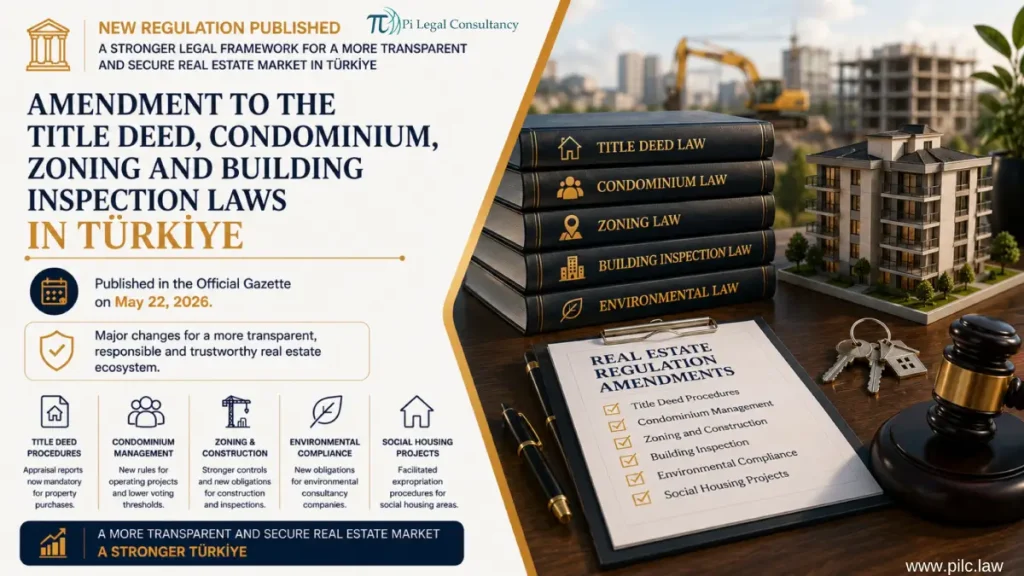
Turkey Real Estate Law Amendments

Rent Determination Lawsuit Turkey

Conveyancing Lawyer in Turkey

Property Management in Turkey

Турецкое гражданство через инвестиции в недвижимость
Last Update : 28.07.2026